
Search rankings can change for many reasons, and no checklist can promise a quick jump. Still, a few focused on-page improvements can remove confusion for visitors and search engines. Start with the page that matters to your business, compare it with the query it is meant to answer, and make changes you can explain and measure.
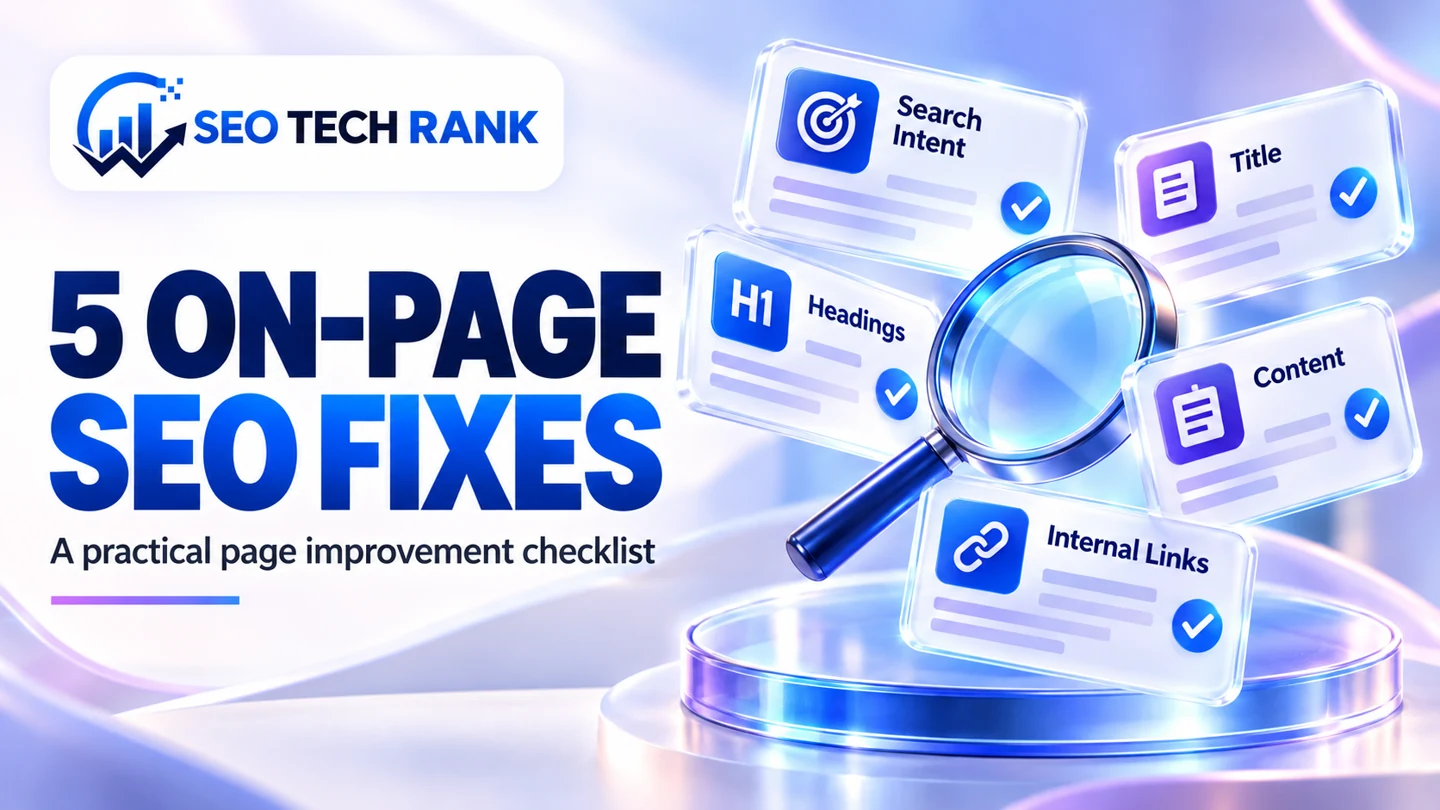
This checklist covers five practical fixes: matching search intent, improving the title and snippet, clarifying headings, strengthening useful content, and connecting the page through internal links and a sound user experience.
1. Match the page to what the searcher needs
Before editing keywords, write down the main question a visitor is trying to answer. Then review the page and the search results for that query. Are people looking for a service provider, a comparison, a how-to guide, or a quick definition? Your page format and level of detail should fit that task.
Choose one clear primary topic for the URL. Add related terms only where they help explain the subject, not as a list of variations. If a service page is trying to answer a broad educational question as well as sell a service, consider whether a supporting article would serve readers better. Keep the main purpose of each page distinct.
2. Make the title and search snippet specific
Write a unique title that accurately describes the page and puts the important topic near the front. A useful title helps people decide whether the result fits their need; avoid repeating the same phrase or adding claims the page cannot support.
Write a concise meta description that previews the page's actual value. Google may use the page text instead of the description, so make sure the visible introduction also explains what the reader will learn. There is no need to force an exact character count or pack the description with keywords.
For this article, the title focuses on on-page SEO fixes and the description previews the five areas covered. The same approach works for service pages: describe the service, intended customer and practical next step in plain language.
3. Give the page a clear heading structure
Use one descriptive main heading that confirms the page topic. Organise the rest with specific subheadings so readers can scan the page and jump to the section they need. A heading should name the point of its section, rather than repeat the target phrase in every line.
Check that the page's heading matches its title and introduction. If the page uses several large headings that compete with one another, simplify the hierarchy. Headings are navigation for people first; they do not need to contain every keyword variation.
4. Improve the information, not just its length
Answer the reader's real questions with accurate, original detail. Explain what a step involves, when it is useful, what information is needed and what limitations apply. Remove repeated paragraphs and broad claims that could appear on any website. Add examples only when they reflect a real process or verified experience.
Review important pages when services, prices, processes or policies change. Check facts, links and calls to action. A clear service page should say what is included, who it is for, how the work begins and how to ask a question. A helpful article should solve the stated problem before asking the reader to contact you.
5. Add useful internal links and check the page experience
Link to related pages when the next step would help the reader. Use link text that tells people what they will find, such as “technical SEO service” or “website design and development”, rather than relying on vague phrases like “click here”. Make sure important pages can be reached through ordinary links from relevant parts of your site.
Then check the page on a phone. Confirm that text is readable, buttons are easy to tap, images have meaningful alternative text, and the layout does not jump or hide important content. Review the canonical URL and indexability settings as well, especially after duplicating or moving a page.
How to prioritise and measure the work
Start with one URL that already receives relevant impressions or supports an important service. Record its current title, description, main query, clicks, impressions and average position in Search Console if it is connected. Make a small set of related changes, note the date, and review the same query and page after search engines have had time to recrawl it.
A ranking movement is not guaranteed, and one change rarely explains every result. Search demand, competition, site-wide signals and recrawling can all affect what you observe. Keep the changes that improve clarity and qualified enquiries, and use the data to decide what to test next.
A quick on-page SEO checklist
- The page has one clear purpose and matches the searcher's likely intent.
- Its title and meta description are unique, accurate and useful.
- The main heading and section headings make the content easy to scan.
- The page answers real questions with current, specific information.
- Relevant internal links and a working mobile experience support the next step.
Good on-page SEO is careful editing supported by evidence. Fix the clearest mismatch first, make the page more useful, and measure what happens without promising a particular ranking outcome.