
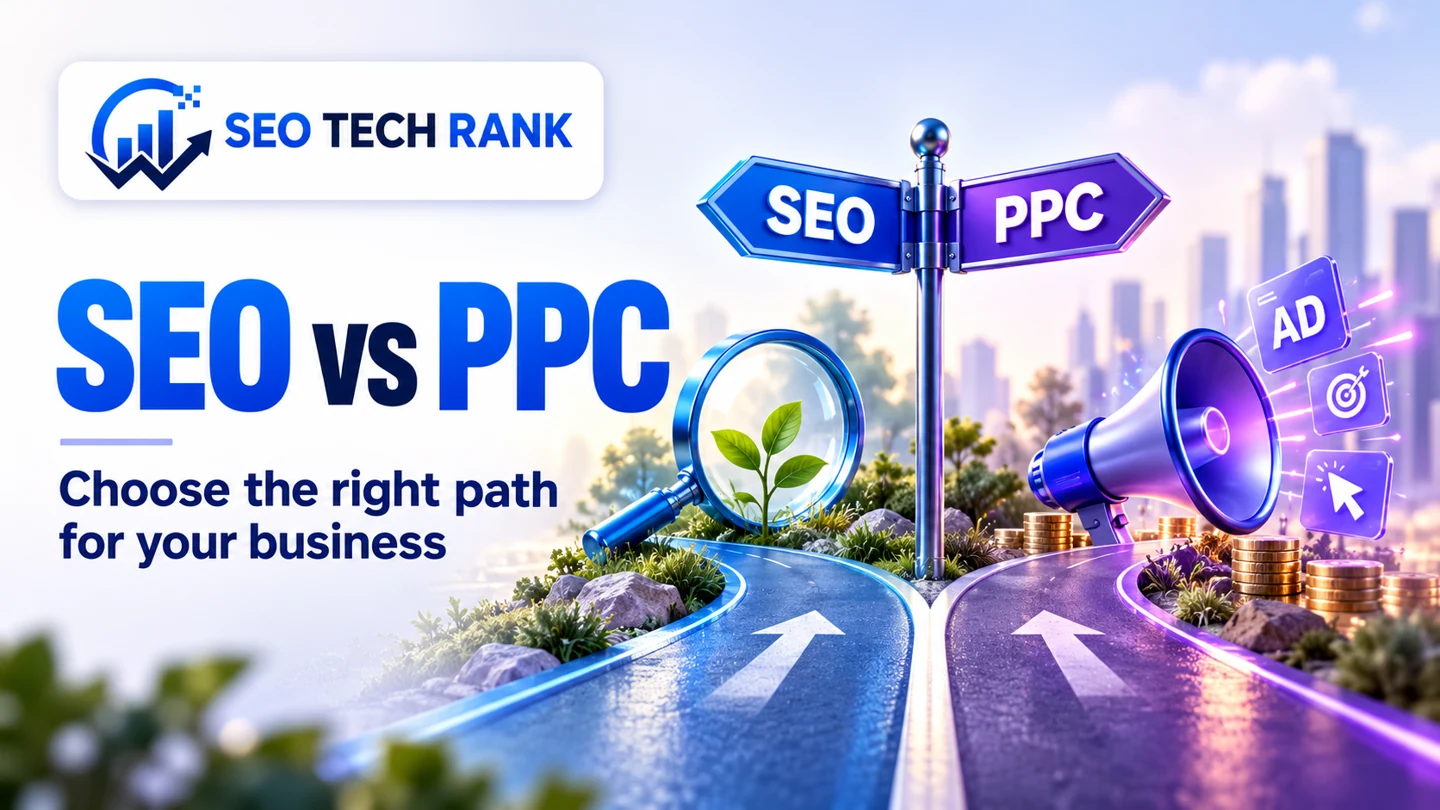
SEO vs PPC is not a contest with one winner for every business. The useful comparison is between the kind of demand you need to reach, how quickly you need feedback, what you can afford to test and whether the business can handle the resulting interest.
SEO concerns organic visibility and useful website information. PPC advertising involves paying for campaign delivery under the platform’s rules. They can support the same offer, but they have different costs, controls and learning requirements.
Separate the objective from the channel
Do you need to explain an unfamiliar service, test a specific offer, reach existing demand or improve the quality of enquiries? An unclear objective makes either channel difficult to judge.
A hypothetical manufacturer launching a new application may need a focused test and a clear explanation of suitability. An established service business with poorly structured pages may first need website improvements. The business situation determines the next question.
Compare how investment is used
SEO work can include research, technical diagnosis, editorial improvements and implementation. Those activities cost time and money even though an organic click is not purchased in the same way as an advertising placement.
PPC requires media spend as well as the work of planning, creative, measurement and account review. A low service fee is not the full campaign cost. Keep platform charges, landing-page work and management fees separate in the proposal.
Understand the difference in control
An advertising account can offer controls over campaign settings and budget, subject to delivery conditions and policy. Organic visibility is influenced through improvements to the website and its relevance, but a business cannot buy a particular organic position.
Google makes the distinction in its guide to SEO. Paying for ads should not be sold as a shortcut to organic rankings.
Think about the speed of learning
Paid campaigns can be useful for testing a defined message when the budget, offer and measurement are ready. They are not automatically an instant source of profitable customers. Poor lead definitions and a weak destination can make the test hard to interpret.
SEO changes also need implementation and time for search systems and customers to respond. A technical correction may behave differently from developing an unfamiliar topic. Avoid promises that reduce either channel to a universal timeline.
Put the destination into the comparison
Both channels can disappoint when the page is unclear. A visitor needs an accurate offer, important conditions and a working next step. A campaign can bring more attention to a problem the website has not solved.
Landing page development may be a separate project. Check whether the proposal includes it, who supplies the content and whether the measurement and enquiry delivery are tested.
Review lead quality rather than only acquisition volume
A search visit, ad conversion, accepted lead and sale are different events. Decide which the business can measure consistently. Do not compare one channel’s form submissions with another channel’s sales and call the result a fair return-on-investment analysis.
Use the quality leads guide to define qualification and follow-up. Where attribution is incomplete, keep that limitation visible in the comparison.
When a combined plan can make sense
The same offer may need a focused paid test and stronger long-term website information. Questions from enquiries can inform editorial work. A useful service page can also support a campaign destination, provided it matches the advertised promise.
Do not assume that paid keyword performance proves how organic search will behave. Audiences, placements and measurement conditions differ. Treat one channel’s evidence as context to investigate, not a guaranteed forecast for the other.
Avoid splitting a small budget into unworkable pieces
Maintaining many channels can leave too little time for useful creative, website changes or review. A staged plan may be more realistic: fix the destination, test one audience and review the evidence before expanding.
Agree a budget boundary and a decision point. State what would justify continuing, pausing or changing the test. A plan without those conditions can become a recurring expense nobody knows how to evaluate.
Questions to ask before choosing
- What customer task is this channel meant to support?
- Which costs are included and which are separate?
- Who owns the account, data and destination page?
- What qualifies as a useful response?
- Who implements improvements after the first review?
- What evidence would make us change the plan?
These questions are more useful than asking which channel is universally cheaper. Review Google Ads management and SEO services against the same business brief. A good recommendation should explain the trade-off, including when the business is not ready to invest in the proposed activity.